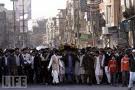
ISLAMABAD – Relating to the unprecedented wave of uprising that has engulfed the entire Indian-held Kashmir, the United Nations has decided to adopt a vividly clear stance on Kashmir issue, a move that has not bode well to India.
Well-aware sources confided to TheNation that United Nations Human Rights Council (UNHRC) would launch a report against the serious human rights violations in IHK. The strongly-worded report would reportedly bring into account all the events taken place in IHK valley after June 11, this year. The report would cover the atrocities committed by Indian security forces from June to September but it is unclear when it would be launched.
It is also learnt that Indian side is holding secretive talks with the top UN hierarchy not to publish a strong worded report on IHK. “Hundreds of cases of murders, assaults, and torture on youth, women and children are going to be reported sometime any sooner,” TheNation was told by credible sources.
On the sidelines of UN General Assembly session in New York, a Chinese delegation had reportedly held meetings with UN top command urging the latter to take a principled stance on Kashmir issue besides assuring full support on the issue. Low profile meetings between Pakistani and Chinese officials were also reported. Following these developments, Pakistan’s Foreign Minister Shah Mehmood Qureshi had taken a strong stand against India’s highhandedness in Occupied Kashmir on Tuesday. Qureshi had minced no words to demand right of self-determination for Kashmiris through plebiscite in IHK. His Indian counterpart S.M Krishna reacted the demand by expressing his ‘disappointment’ over the Pakistani FM’s comments.
Thursday, September 30, 2010
Sunday, September 26, 2010
Discarded for hunting, Pellet Gun preferred weapon against Kashmiris
The 'deadly' Pump Action Shotgun or Pellet Gun is nowadays a preferred weapon against the street protesters in Kashmir. But a 19th century British army officer had discarded its use even for hunting because of the large scale causalities the pellets caused on the prey.
The officer, who hunted migratory birds in Wular Lake, was so disheartened at the massacre of the waterfowl that he pledged never to use the gun again.
THE ANECDOTE
The incident dates back to around 1880 when General Dunlop, a British Army Officer from the then neighboring India came to Kashmir for holidaying. He was putting up in the Dal Lake here at a houseboat.
One day the houseboat owner, Ghulam Rasool Tuman aka Lassu, offered General Dunlop a safari ride for hunting of migratory birds in the Wular.
General Dunlop was to use a Punt Gun, a then version of shotgun. The pellets hit the target. Dozens of birds were lying dead, scattered in the lake. But the British officer was upset. He was disheartened by the large scale killing of birds.
“This gun leads to massacre of birds. This is inhuman. I will never use it again,” General Dunlop told Lassu.
NEW AVATAR
The new avatar of the Punt Gun, the Pump Action Gun is being used to quell street protests in Kashmir. While the government projects the pellet gun as a Non-Lethal Weapon (NLW), at least three persons have died of the fire while hundreds have been injured.
A single shot, as per observers, fires numerous tiny particles hitting multiple targets in one go. The medicos treating the pellet victims in Srinagar find it deadlier than bullets.
The doctors say not only the treatment was more complicated than that for a bullet injury, but the damage caused by the pellets was even more killing.
The doctors have been revealing gory tales of the patients as they battle for life.
The pellet cases have shocked the doctors more so because apparently the victims don’t have any big wounds like that in case of a bullet injury.
“Pellets apparently go unnoticed. The entry mark is so small that if patient doesn’t complain of pain the wound could be neglected and ultimately prove more lethal,” the doctors say. “The wound is barely of the size of mosquito bite.”
But the damage is big. Medicos at SK Institute of Medical Sciences said the pellets have resulted in “devastating injuries to patients as almost all their organs were involved.”
The doctors in trouble-torn Kashmir have over 20 years of experience in treating the firearm cases. This makes them observe that the pellets are deadlier. “A bullet hits one or two organs but a pellet damages multiple organs that too with multiple perforations,” said a surgeon.
Till now, of the three persons killed by pellets, one of the victims was a close relative of senior separatist leader and Jammu and Kashmir Liberation Front Chairman Muhammad Yasin Malik.
In the latest assault at Bemina on September 24, a JKLF leader Showkat Bakshi and his family members were amongst those targeted by the pellet gun.
The officer, who hunted migratory birds in Wular Lake, was so disheartened at the massacre of the waterfowl that he pledged never to use the gun again.
THE ANECDOTE
The incident dates back to around 1880 when General Dunlop, a British Army Officer from the then neighboring India came to Kashmir for holidaying. He was putting up in the Dal Lake here at a houseboat.
One day the houseboat owner, Ghulam Rasool Tuman aka Lassu, offered General Dunlop a safari ride for hunting of migratory birds in the Wular.
General Dunlop was to use a Punt Gun, a then version of shotgun. The pellets hit the target. Dozens of birds were lying dead, scattered in the lake. But the British officer was upset. He was disheartened by the large scale killing of birds.
“This gun leads to massacre of birds. This is inhuman. I will never use it again,” General Dunlop told Lassu.
NEW AVATAR
The new avatar of the Punt Gun, the Pump Action Gun is being used to quell street protests in Kashmir. While the government projects the pellet gun as a Non-Lethal Weapon (NLW), at least three persons have died of the fire while hundreds have been injured.
A single shot, as per observers, fires numerous tiny particles hitting multiple targets in one go. The medicos treating the pellet victims in Srinagar find it deadlier than bullets.
The doctors say not only the treatment was more complicated than that for a bullet injury, but the damage caused by the pellets was even more killing.
The doctors have been revealing gory tales of the patients as they battle for life.
The pellet cases have shocked the doctors more so because apparently the victims don’t have any big wounds like that in case of a bullet injury.
“Pellets apparently go unnoticed. The entry mark is so small that if patient doesn’t complain of pain the wound could be neglected and ultimately prove more lethal,” the doctors say. “The wound is barely of the size of mosquito bite.”
But the damage is big. Medicos at SK Institute of Medical Sciences said the pellets have resulted in “devastating injuries to patients as almost all their organs were involved.”
The doctors in trouble-torn Kashmir have over 20 years of experience in treating the firearm cases. This makes them observe that the pellets are deadlier. “A bullet hits one or two organs but a pellet damages multiple organs that too with multiple perforations,” said a surgeon.
Till now, of the three persons killed by pellets, one of the victims was a close relative of senior separatist leader and Jammu and Kashmir Liberation Front Chairman Muhammad Yasin Malik.
In the latest assault at Bemina on September 24, a JKLF leader Showkat Bakshi and his family members were amongst those targeted by the pellet gun.
Dr Fai urges international community to intervene
"The irony is that the impunity that is thus being granted to the violators is not in the context of a new dispute. It is being allowed to arise and to persist in a territory which, under international law, is not part of any member state of the United Nations and whose status is yet to be determined through a free and impartial plebiscite under supervision and control of the United Nations,” Dr Fai said while speaking during the “Annual Meeting of the Council of Foreign Ministers (CFM)” of the Organization of Islamic Conference (OIC) at the United Nations headquarters.
“India has given its forces powers to shoot to kill and the license to abuse Kashmiris in order to suppress the popular movement for self-determination. These tactics have no military purpose whatsoever. Their only imaginable purpose is to frighten a people into submission,” he said.
Fai stressed on the international community to intervene. “As long as India is successful in isolating Kashmir from the rest of the world, they will not only continue to trample the Kashmiris’ basic rights and freedoms but will also block all peaceful processes for the restitution and restoration of these rights and freedoms,” he added.
Fai told the Council of Foreign Ministers that the solution of Kashmir is both urgent and vital. It has a far more populous and strategic area than other trouble spots in the world. The pain felt by the people of Kashmir is no less devastating than that felt by the people of Haiti. The nuclear tinderbox in South Asia is no less threatening than in Korea.
Fai urged the OIC to persuade Government of India to initiate the Kashmir centric CBM’s, including: (i). Demilitarizing of Kashmir; (ii). Allowing the people of Kashmir to freely express their political views; (iii). Releasing all political prisoners, including Shabir Ahmed Shah and Mian Abdul Qayyum; (iv). Repealing draconian laws; and (iv.) Allowing Kashmiri political leaders to travel abroad.
Thursday, September 23, 2010
UN chief and OIC calls for end to killings in Kashmir
UNITED NATIONS – UN Secretary General Ban ki-Moon Tuesday broke his silence over killings of freedom-seeking people in Indian Occupied Kashmir when he called for an immediate end to violence in the disputed territory.
“The Secretary General regrets the latest loss of life,” his spokesman Martin Nesirky said in carefully-word remarks. “He (Ban) calls for an immediate end to violence,” the Spokesman added in response to a question about deteriorating situation in Kashmir, which has been wracked by pro-freedom demonstrations. India has reacted by clamping a 24-hour curfew across the Kashmir valley.
The security forces resort to use of indiscriminate force has drawn condemnation from several quarters including the Organisation of Islamic Conference and neighbouring Pakistan.
Ban urged “calm and restraint by all concerned” and continues to follow the situation closely.
Kashmir is a disputed territory as declared by the relevant UN Security Council resolutions and the people of the region say they must get their promised rights. More than one hundred stone-throwing protestors have been killed in retaliatory firing by Indian security forces since July when the unrest broke out.
“The Secretary General regrets the latest loss of life,” his spokesman Martin Nesirky said in carefully-word remarks. “He (Ban) calls for an immediate end to violence,” the Spokesman added in response to a question about deteriorating situation in Kashmir, which has been wracked by pro-freedom demonstrations. India has reacted by clamping a 24-hour curfew across the Kashmir valley.
The security forces resort to use of indiscriminate force has drawn condemnation from several quarters including the Organisation of Islamic Conference and neighbouring Pakistan.
Ban urged “calm and restraint by all concerned” and continues to follow the situation closely.
Kashmir is a disputed territory as declared by the relevant UN Security Council resolutions and the people of the region say they must get their promised rights. More than one hundred stone-throwing protestors have been killed in retaliatory firing by Indian security forces since July when the unrest broke out.
A day out in curfewed Valley (By Dilnaz Boga, "Photo Journalist from Mumbai")
In an attempt to collect the pink slip that would allow my free movement in the city for the next four days, I thought the risk was worth it. After all, what good is a journalist cooped up in his or her home at a time when the job requires you to bear witness to what is happening outside?
A group of Central Reserve Police Force (CRPF) personnel stopped me as soon as I stepped out of the gate. “If there was a curfew in Delhi, would you step out?” he asked. “Yes, I’m a journalist and I need to get my curfew pass,” I replied. There have been several curfew days in the last three months and I’ve stepped out before, I added. He checked my credentials, and let me proceed. The pedestrian after me wasn’t so lucky despite the fact he had a curfew pass.
Negotiating my way through five groups of argumentative CRPF personnel posted from Rajbagh to Broadway, I finally heaved a sigh of relief. Had I been a local, there was no way in hell I would’ve been allowed to make the trek. The fact that I look Indian and I’m a woman also helped.
By that evening, I was a proud owner of a brand new curfew pass. The following morning, which was Monday, I decided to push my luck and pay a visit to SKIMS. I checked with the doctors, and as per their advise boarded an ambulance from Jehangir Chowk at 7 am.
All along the route to the chowk, the police and the CRPF recognised me. One of the CRPF guys near my house even said, “Good morning, madam.” I thought, wouldn’t it be nice if they used that tone with Kashmiris too. Such a difference it would make. But I, unlike the rest, live in fool’s paradise.
On curfew days and regular days, I walk a lot in the city to take photographs. Some of the policemen and CRPF that morning let me through because they recognised my camera, I guessed. “Madam, I’ve seen you in Maisuma several times during protests,” said a cop. I politely nod and walk on after showing my credentials and explaining repeatedly what I was doing out there.
The only people out on the street were men in uniform and cops in civilian clothes, lots of other government employees from the security sector in cars without number plates and hospital staff on their way to work in ambulances.
While waiting for the ambulance, one of the CRPF guys flagged down a man on a scooter and ordered him to drop me and my friend to SKIMS. This was mighty embarrassing for all three of us. I declined, saying that the ambulance was a better option and they should let that poor man go. Finally, common sense prevailed. How easily things could have gone the other way.
Upon my return from the hospital, I was dropped on M A Road and had to walk home. I decided to take another route. I was stopped by the CRPF before the bridge. “Where do you think you’re going?” he asked, while the rest of his crew gawked. “Home,” I said. “Where are you returning from?” he persisted. “Work.”
He wasn’t about to give up easily, “Don’t you know its curfew. I didn’t see you earlier on in the day walk from here.” I told him that was because I had a curfew pass and I had taken the bund. Finally, he let me go. But a man with a curfew pass behind me got assaulted with a lathi by a local cop. Nothing feels as rotten as a potent concoction of helplessness and fear. I waited for a few seconds and walked on. I turned back, praying that they had let the man go. Strangely enough, the guy had started walking in my direction as if nothing had happened. Then the realisation hit me, he must be so used to it that lathis failed to faze him. Only if the cop had greeted him, “Good evening”, instead, I thought, shaking my head. That would have stunned the wits out of the poor man.
That evening, as I made my way home from the Abdullah bridge, all sounds drowned as the birds squawked at their loudest from a chinar tree by the river. I felt like they were trying to compensate for those who were not allowed to protest all day. And this time, there was no tear gas shelling, no rubber bullets, no SLR rounds, no metal pellets, only unbelievably loud squawks. At least, the birds were free in the curfewed Valley.
Thursday, September 16, 2010
Rally in Rawalpindi against Indian state terrorism in IHK
The rally, started from Public Park, Shamsabad, and culminated at Rawalpindi Press Club, was led by the APHC-AJK Convener, Mehmood Ahmad Saghar and participated by a large number of people. The protesters throughout the march raised high-pitched anti-India slogans.
The Hurriyet leaders, while addressing the demonstrators, urged India to withdraw troops from the occupied territory, repeal draconian laws and release all illegally detained Kashmiri Hurriyet leaders and activists so that a conducive atmosphere could be created for amicable and peaceful resolution of the Kashmir dispute. They said that Indian government had exhausted all its resources to suppress the ongoing Kashmir liberation movement in occupied Kashmir but badly failed in its nefarious designs as the people of Jammu and Kashmir were determined to continue their just struggle for right to self-determination till its logical conclusion.
The Hurriyet leader also condemned the killings of more than 90 Kashmiris, mostly children and teenagers, by Indian troops during last three months. They appealed the world community and international human rights organisations to send their representatives to the occupied territory to monitor the massive human rights violations by Indian troops. They also urged the world leaders and organisations to play role in resolving the Kashmir dispute in accordance with the Kashmiris’ aspirations and the relevant UN resolutions.
The rally was attended among others by, Syed Yousaf Naseem, Syed Faiz Naqshbandi, Nisar Mirza, Tufail Altaf Butt, Sheikh Muhammad Yaqoob, Muhammad Rafique Dar, Khadim Hussain, Ishtiaq Hameed, Shoiab Shah, Abdul Hameed Lone, Abdul Mateen, Manzoorul Haq Butt and Muzaffar Hussain Shah.
Meanwhile, a protest march was held in Muzaffarabad which was led by Ghulam Muhammad Safi, the Convener of the APHC-AJK chapter of the forum patronized by veteran Kashmiri Hurriyet leader, Syed Ali Gilani. The march started from Press club and ended at the United Nations Observers’ Office where a memorandum was also presented.
Troops disrupt essential supplies
Srinagar, Sep 15: With no let up in curfew for the fourth running day Wednesday, the crisis for the Srinagarites has been compounded by the behaviour of the paramilitary CRPF troopers who allegedly don’t allow any supplies to reach the consumers.
While some areas are facing acute shortage of water, the Shahr-e-Khaas residents said their power supply was being frequently snapped adding that no essentials of daily need were being allowed to reach the consumers.
Water supply hit
Areas like Batamaloo, Natipora, Naik Bagh and even some hospitals have been facing shortage of water.
While the Public Health Engineering department calls them “new installations”, the PHE says it had been supplementing the supplies to the affected areas through water tankers.
But since Sunday when curfew was clamped the tankers were not only prevented from reaching the destinations but some of the drivers were thrashed allegedly by the police and paramilitary CRPF.
‘We have no water to drink and PHE people say they are unable to send water tankers to us,” complained residents of Firdousabad Batamaloo.
Sources said following a resistance from the tanker drivers that they wouldn’t put their “life to risk again and again”, the Executive Engineer PHE, Rafiq Ahmed Malik on Tuesday called on the district administration asking them to “come clear on if or not the PHE was to be allowed to work under essential services during the ongoing curfew”.
Referring to the thrashing of his staff in areas Jehangir Chowk, Malik is learnt to have said that “life of his staff was at risk while trying to perform essential public service.”
A senior official at the Chief Enigneer’s office Wednesday said the matter was been resolved with the police and other authorities adding that water supplies have been restored.
“Today we pressed into service 15 tankers for water supplies to the affected areas,” the official told Greater Kashmir adding that it would suffice the public need.
Power woes
The residents of Shahr-e-Khaas accused the police of deliberately snapping the power supply to the areas so that “people get frustrated.”
Residents of areas like Eidgah, Narawara and Zadibal said the power supply was being frequently cut throughout the day.
“Given the prevalent situation, we poor people wanted to spare the LPG stock as much as possible by cookng food in electric heaters. But the police is deliberately snapping the power supplies so that our food remains uncooked,” said the residents of Eidgah.
“Cops are well versed with the art of switching off the power at the colony transformers and they are making the best use of this skill to frustrate us,” the residents said.
Vegetables smashed
The residents of Nawa Kadal said that in the early morning hours police allowed some vegetable vendors carrying on lot in baskets to come out on streets and proceed.
“But the moment the vegetable vendors reached the main road, their baskets were beath ruthlessly and baskets snatched only to scatter the vegetables on the main road,” a resident told Greater Kashmir adding he watched the scene from his window.
“Once the vegetables got scattered, some of the cops crushed them under their jackboots and shouted out at people asking them to come out and take the spoiled lot for cooking,” he added.
Milk spilled
Similar, the residents of Nawab Bazar said was done with the milkmen who were allowed to come out on streets with milk.
“The moment they walked a few yards, their milk cans were snatched and spilled on the road,” they residents said.
Residents of Chattabal said baker locally known as Kandur was allowed to start making morning bread, Naan in his Tandoor.
“But the moment he started making bread, a few troops barged into his shop and put a bag full of dirty polythene in the Tandoor,” the complainants alleged adding they got no bread since Sunday.
Propoganda
A senior police official said that the complaints were baseless adding that people want to defame police “for the sake of it.”
“The miscreants want to get a chance for stone pelting and such excuses they make to only to defame us and make their mischief appear genuine,” he added.
He said the police was performing its duty to main law and order.
Subscribe to:
Posts (Atom)